
2026-09-18 · Tom Harlan
Signs of a Rodent Infestation
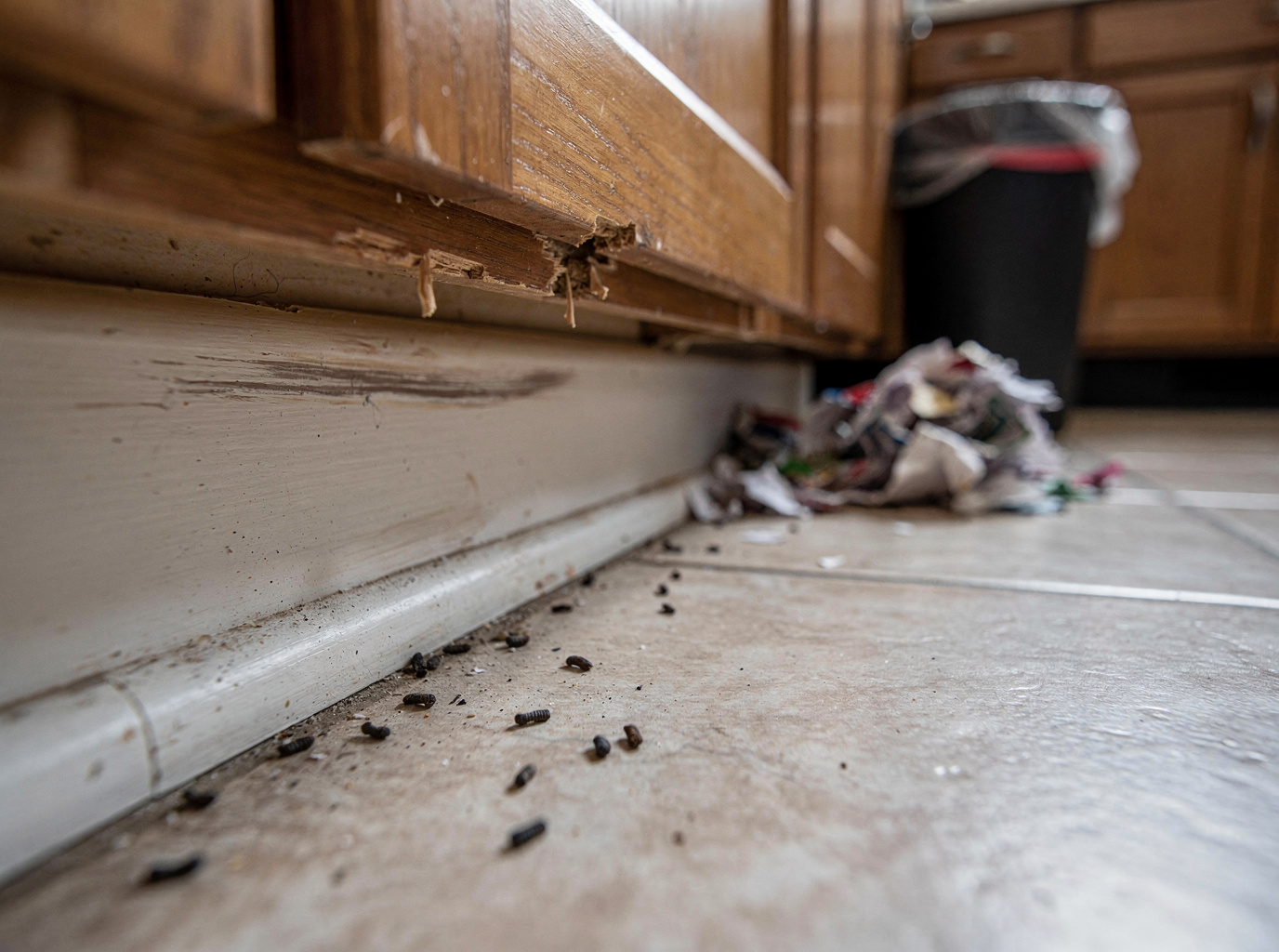
Common signs of a rodent infestation appear within days of entry in Joplin homes. Residents notice dark droppings near baseboards, fresh gnaw marks on wood, and scratching sounds after dark in walls or attics. These indicators show activity from mice or rats that exploit gaps in older structures common across Jasper County.
Droppings and Urine Evidence
Rodent droppings provide the most reliable early indicator in Joplin. Mice produce 50 to 75 rice-sized pellets daily, while rats leave larger, capsule-shaped waste measuring up to 3/4 inch. Fresh droppings appear dark and moist; older ones turn gray and crumble. Urine stains show as yellow streaks under UV light along baseboards or in cabinets. In homes built before 1950 in Downtown Joplin and Murphysburg, these signs often cluster near kitchens and garages because original plumbing penetrations allow easy access. Severe spring storms drive rodents indoors from Schifferdecker Park green spaces, concentrating waste near water sources. Checking under sinks and behind appliances every two weeks catches problems before populations grow. Rodent Droppings in House explains how to distinguish mouse from rat waste in local housing stock.
Scratching Noises and Movement Sounds
Nighttime scratching in walls signals rodents traveling between nests and food areas. Mice produce light, rapid tapping; rats create heavier thuds and gnawing that can last several minutes. In North Joplin and Royal Heights properties with balloon framing, sounds travel upward into attics and down into crawl spaces. Humid subtropical conditions keep rodents active year-round, but activity spikes after heavy rains when outdoor food sources wash away. Homeowners in Webb City and Carthage report similar patterns in homes near Route 66 Carousel Park. Listening at night between 10 p.m. and 4 a.m. helps confirm the source. Why Do I Hear Scratching in My Walls at Night? covers how to locate the exact travel paths without disturbing the animals.
Gnaw Marks and Structural Damage
Rodents chew constantly to control tooth growth, leaving distinct damage on wood, wires, and insulation. Mice create 1/8-inch wide grooves; rats produce wider, rougher marks up to 1/2 inch. In Jasper County homes, marks frequently appear on door frames, electrical boxes, and stored boxes in garages. Older neighborhoods like Iron Gates and Blendville South contain original lath-and-plaster walls that rodents follow easily between rooms. Spring storms increase pressure on foundations, widening small gaps that become permanent entry points. Checking for shredded paper or insulation near these marks confirms nesting activity. Mice vs Rats: How to Tell Which Rodent You Have details how tooth marks differ between species common to the region.
Entry Points and Nest Locations
Rodents need openings the size of a dime for mice or a quarter for rats. Common spots include gaps around utility lines, dryer vents, and foundation cracks worsened by freeze-thaw cycles. Nests appear as shredded material in attics, wall voids, or behind appliances. Properties near Schifferdecker Park and the Joplin Museum Complex see higher pressure because green spaces provide outdoor harborage. Checking soffits and fascia boards after storms reveals new chew damage. Rodent Exclusion shows how to seal these points permanently using materials suited to local humidity and wind loads.