
2026-09-18 · Tom Harlan
How Rodents Get Into Homes
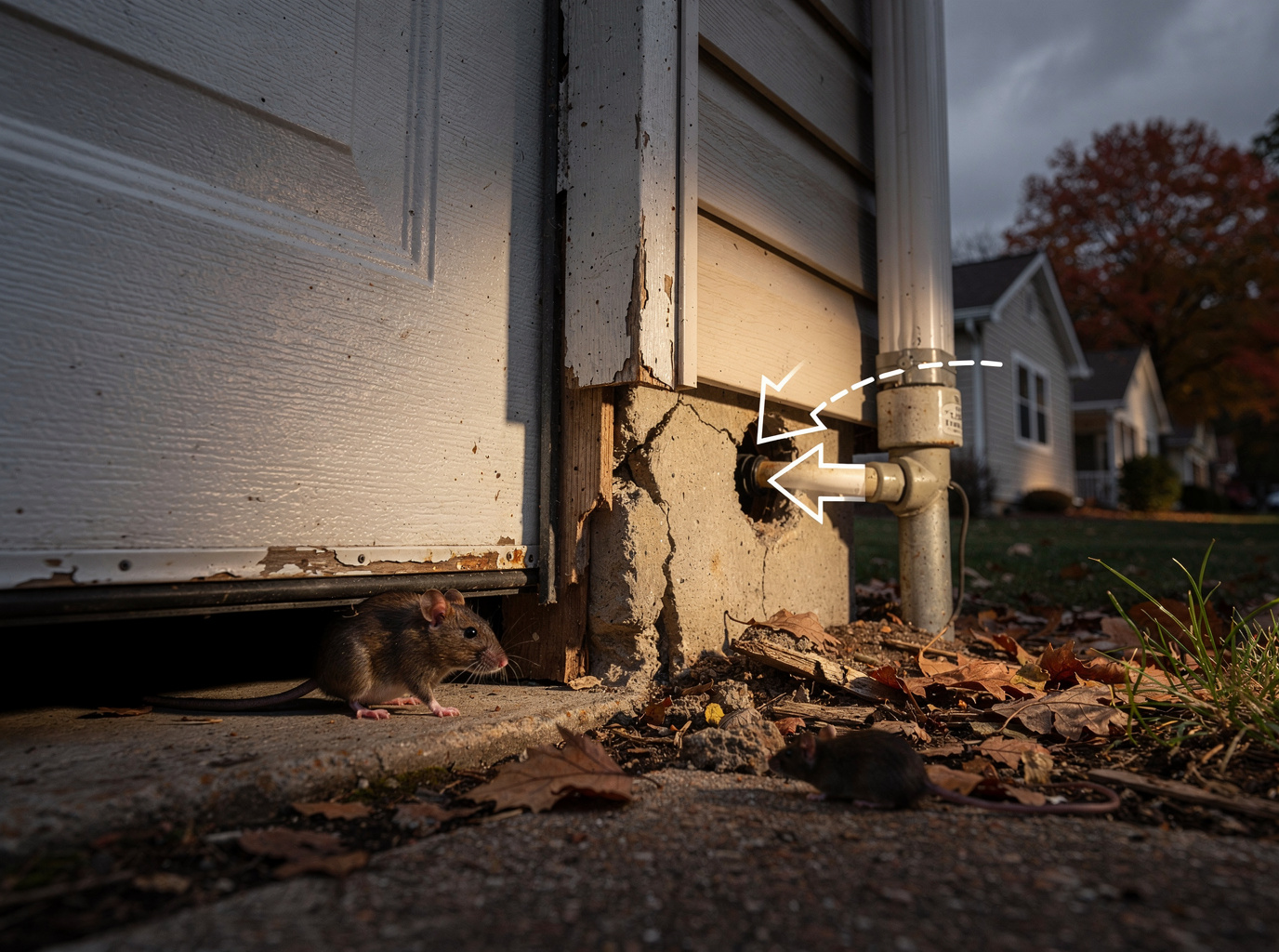
Rodents get into homes in Joplin through openings as small as 1/4 inch for mice and 1/2 inch for rats, often around foundations, rooflines, and utility entries in the area's older housing stock. These gaps appear in homes built decades ago in Downtown Joplin and North Joplin, where settling soil and repeated spring storms loosen siding and shingles. Severe weather in the humid subtropical climate brings high winds and hail that crack mortar and tear vents, giving rodents direct access. Once inside, mice and rats follow pipes and wires to attics and wall voids, quickly establishing nests near food sources.
Common Entry Points Around Foundations and Walls
Joplin's older homes in neighborhoods like Murphysburg and Rosedale often sit on stone or concrete foundations that develop cracks over time from freeze-thaw cycles and heavy spring rains. Mice squeeze through gaps where pipes enter the house or where dryer vents meet the exterior wall. Rats target larger openings around garage doors and basement windows common in North Joplin properties. In Jasper County, soil movement from storms shifts slabs slightly, widening these points each year. Homeowners notice signs such as gnaw marks on wood trim or droppings near baseboards when these routes stay open. Checking the perimeter after each storm reveals new damage before rodents exploit it.
Storm Damage and Roofline Openings
Severe spring storms in Joplin frequently loosen shingles and damage soffits on homes near Schifferdecker Park and the Joplin Museum Complex. High winds pry up flashing around chimneys, creating entry points that rats use to reach attics. Hail dents metal vents and leaves holes that mice enlarge within weeks. Homes in nearby Webb City and Carthage face the same pattern because the same weather systems cross the region. Once a roof breach forms, rodents follow insulation and wiring runs downward into living spaces. Regular roof inspections after storms prevent these weather-created pathways from becoming permanent rodent highways. Rodent Damage to Electrical Wiring shows how quickly these attic entries lead to further problems inside walls.
Seasonal Behavior and Neighborhood Patterns
Rodents increase activity in Joplin during fall as temperatures drop and they seek shelter in older homes throughout Royal Heights and Iron Gates. Mice move from fields and parks like Route 66 Carousel Park into nearby structures when crops are harvested. Rats follow sewer lines and drainage ditches that run under streets in Downtown Joplin, entering through floor drains during heavy rains. In multifamily buildings common in the area, shared walls allow rodents to travel between units once one opening exists. Spring storms then push more rodents indoors as outdoor food sources wash away. Tracking these seasonal shifts helps target the exact points where rodents first cross the building envelope.
Sealing Entry Points Effectively
Rodent exclusion focuses on closing gaps with steel wool, metal mesh, and caulk rated for exterior use on homes across Joplin. Start at ground level around the foundation, then move to roof edges and utility penetrations where storms create new openings. In areas like Blendville South, older siding requires extra attention because warped boards leave larger spaces. Professional assessment identifies hidden routes that homeowners miss, such as soffit corners damaged by hail. Rodent Exclusion addresses these structural fixes directly. Pairing exclusion with monitoring stops recurring issues that appear when only trapping occurs, as explained in Why Do Rodents Keep Coming Back After Trapping?.